Published on: 13 March, 2026 19:54 IST
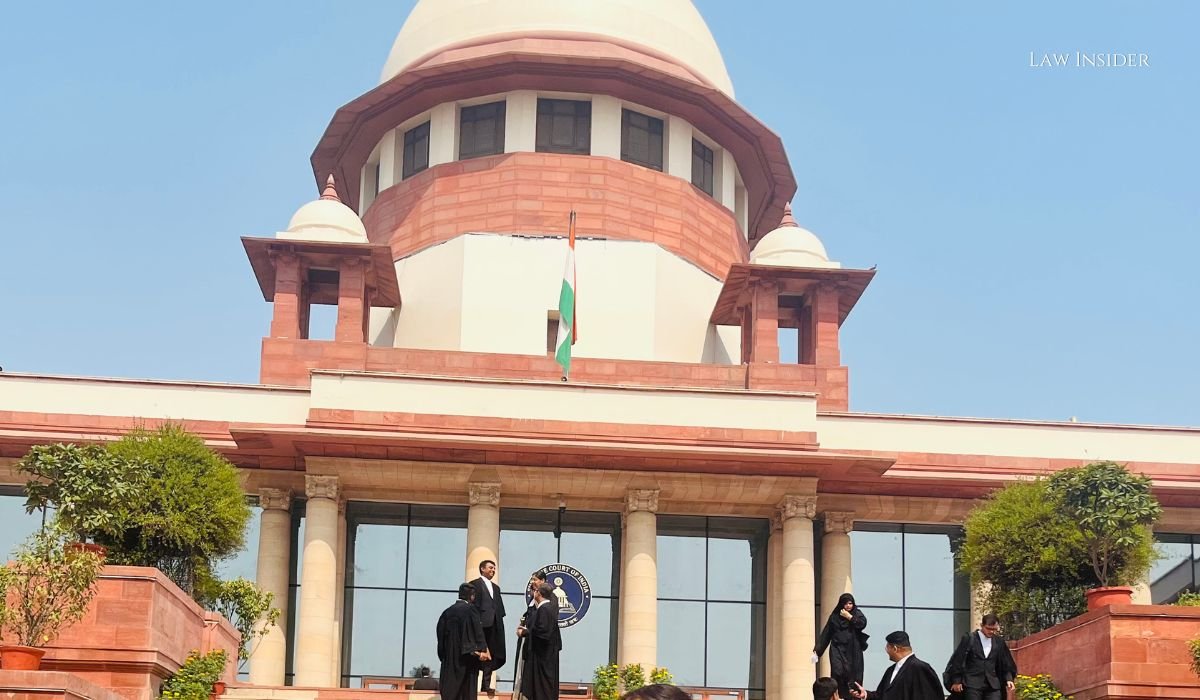
The Supreme Court of India has imposed a lifetime ban on three academics involved in drafting a controversial chapter on the judiciary in an NCERT Class 8 Social Science textbook, citing their role in projecting a negative image of the institution by referencing “corruption in judiciary.”
A bench comprising Chief Justice of India Surya Kant, Justice Joymalya Bagchi, and Justice Vipin M Pancholi (also referred to as Vipul M Pancholi in reports) passed the order on Wednesday (March 11 or 12, 2026, based on reporting dates). The court held the academics responsible for either lacking reasonable knowledge of the judiciary or deliberately misrepresenting facts to impressionable Class 8 students (typically aged 13-14).
The ban prohibits the three academics from any future involvement in government or government-aided institutions, projects, assignments, or curriculum-related work. All central and state governments, along with funded bodies, have been directed to immediately disassociate from them.
This escalation follows the court’s earlier actions in late February 2026, when it took suo motu cognizance of the textbook content, imposed a complete blanket ban on the book’s publication, reprinting, digital dissemination, and distribution, and ordered the seizure of physical copies. The chapter in question, part of “The Role of the Judiciary in Our Society,” discussed challenges like case pendency and corruption in the judiciary, which the bench described as a “deep-rooted, well-orchestrated conspiracy” to malign the institution and “fire a gunshot” to make it bleed.
NCERT had earlier apologised unconditionally for the “inappropriate” and “unintentional” inclusion of the content, withdrawn the textbook, and promised revisions. The director, Dinesh Prasad Saklani, tendered an unqualified apology during proceedings, acknowledging the “major lapse” and committing to preventive measures.
The Supreme Court also directed the Union government to identify and act against “social media mischief-mongers” who irresponsibly endorsed or amplified the objectionable content post the February 26 ban, emphasising that such actions were not aimed at stifling legitimate or objective criticism of the judiciary but at preventing deliberate misrepresentation to young students.
The identities of the three banned academics are linked to the Textbook Development Team for the chapter, which included experts under a specific chairmanship (as per NCERT disclosures in related reports). The court stressed that the orders aim to “catch the bull by its horns” in protecting judicial integrity while allowing constructive discourse.
This development has sparked wider debate on curriculum content, academic freedom, transparency in institutions, and the balance between educating students on societal realities and safeguarding the judiciary’s reputation. The matter remains under the court’s watch, with potential further directions expected.