
Published on: 20 January , 2026 22:21 IST
Over the past decade, relations between India and the United Arab Emirates (UAE) have grown far beyond traditional diplomacy. What now exists is a mature and wide-ranging strategic partnership, built on strong economic cooperation, shared regional interests, and deep people-to-people ties. With more than 3.5 million Indians living and working in the UAE and bilateral trade touching historic highs, the relationship has steadily evolved into one of India’s most important engagements in West Asia.
From trade and energy to defence, technology, and culture, the two countries have signed a series of agreements that reflect both ambition and trust. This article traces the most recent developments particularly those emerging from the January 2026 summit while also examining the key agreements that form the backbone of India–UAE cooperation.
The 2026 Short meeting with PM Modi
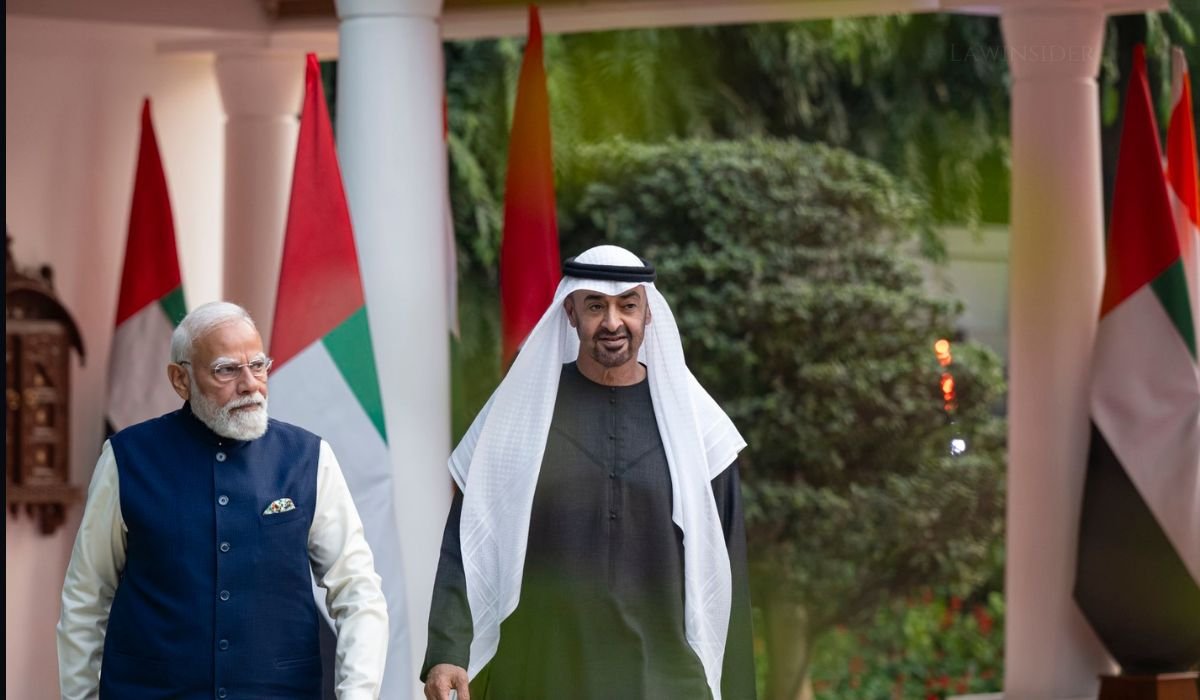
A major boost to bilateral ties came on 19 January 2026, when Prime Minister Narendra Modi and UAE President Sheikh Mohamed bin Zayed Al Nahyan held delegation-level talks in New Delhi for only 3 Hours. The headline outcome of the meeting was a bold commitment: both sides agreed to work towards doubling bilateral trade to USD 200 billion by 2032.
This target builds on the momentum created by the Comprehensive Economic Partnership Agreement (CEPA) of 2022, which has already transformed trade flows. By FY 2025, bilateral trade had crossed the USD 100 billion mark an achievement once considered aspirational.
The 2026 discussions resulted in several important agreements across strategic sectors:
Defence Cooperation
A letter of intent was signed to pave the way for a comprehensive strategic defence partnership. This is expected to deepen military collaboration through joint exercises, defence manufacturing, and greater technology sharing.
Space Collaboration
Both sides agreed to explore joint initiatives in space infrastructure and commercial space activities. Proposed areas include satellite development, launch facilities, training centres, and capacity-building—signalling a move beyond symbolic cooperation to practical collaboration.
Energy and Nuclear Cooperation
One of the most significant commercial outcomes was a long-term LNG supply agreement between Hindustan Petroleum Corporation Limited (HPCL) and ADNOC Gas. Valued at up to USD 3 billion, the deal will see India import 0.5 million metric tonnes of LNG annually over a 10-year period starting in 2028.
In parallel, India and the UAE reaffirmed their intent to strengthen civil nuclear cooperation, including collaboration on large nuclear reactors, safety standards, and regulatory best practices.
Food Safety and High-Performance Computing
Agreements were concluded in the area of food safety, alongside plans to establish a supercomputing cluster in India—an initiative aimed at strengthening India’s technological and research capabilities.
Investment and Infrastructure Development
A letter of intent outlined UAE participation in the development of a Special Investment Region at Dholera, Gujarat. The project envisions an integrated ecosystem comprising an international airport, smart city infrastructure, rail connectivity, energy facilities, and aviation training centres.
Additionally, First Abu Dhabi Bank and DP World announced plans to expand their presence in Gujarat International Finance Tec-City (GIFT City), reinforcing financial and logistics linkages.
Cultural Engagement
In a symbolic yet meaningful step, the two leaders announced the establishment of the “House of India” in Abu Dhabi- a cultural space housing a museum dedicated to Indian art, history, and archaeological heritage.
Collectively, these initiatives reflect a shared desire to expand cooperation into future-oriented areas such as artificial intelligence, clean energy, food security, and advanced technologies.
The Existing Agreements that Built the Partnership
The current depth of India–UAE relations rests on a strong legal and institutional foundation. Since 2014, the two countries have signed more than 80 memoranda of understanding and agreements across diverse sectors. Some of the most consequential ones are outlined below.
Trade and Economic Cooperation
The Comprehensive Economic Partnership Agreement (CEPA), signed on 18 February 2022, remains the cornerstone of economic ties. By eliminating or reducing tariffs on over 80% of traded goods and improving access for services, CEPA has accelerated growth in sectors such as gems and jewellery, textiles, pharmaceuticals, and engineering goods.
To further encourage investment, the two countries signed a Bilateral Investment Treaty in February 2024, providing investor protection mechanisms and a predictable dispute resolution framework.
Another important step was the introduction of the Local Currency Settlement system in July 2023, allowing trade transactions in Indian Rupees and UAE Dirhams. This move has reduced reliance on the US dollar and lowered transaction costs for businesses.
Defence and Security
The relationship was elevated to a Comprehensive Strategic Partnership in January 2017, marking a turning point in defence and security cooperation. This was complemented by agreements on defence industry collaboration, counter-terrorism, maritime security, and cybercrime.
Notably, cooperation in cybersecurity formalised through a 2016 MoU—has gained increasing relevance as both nations confront digital threats and cybercrime.
Energy and Infrastructure
Energy cooperation has long been a central pillar of the partnership. The 2017 agreement between Indian Strategic Petroleum Reserves Limited and ADNOC allows UAE crude oil to be stored in India’s strategic reserves, enhancing India’s energy security.
More recently, both countries have expanded cooperation into clean energy. Agreements signed in 2023 and 2024 focus on green hydrogen, renewable energy investments, and joint solar and wind projects.
Space, Technology, and Advanced Industries
Space cooperation began as early as 2016 with an MoU between ISRO and the UAE Space Agency, later updated to include joint missions and satellite development.
In October 2023, a forward-looking agreement on industries and advanced technologies was signed, covering artificial intelligence, robotics, and advanced manufacturing areas critical to both economies.
Labour, Railways, and Social Protection
Given the size of the Indian workforce in the UAE, manpower cooperation agreements signed in 2018 play a crucial role in protecting workers’ rights and ensuring ethical recruitment.
Additional agreements cover rail infrastructure development, prevention of human trafficking, and technical cooperation across multiple sectors.
The Road Ahead
The India- UAE partnership today stands as a strong example of pragmatic and forward-looking South-South cooperation. With initiatives such as the India–Middle East–Europe Economic Corridor and growing alignment on sustainable development and digital transformation, the relationship is poised to deepen further.
As global economic and geopolitical uncertainties intensify, the network of agreements between India and the UAE provides both countries with resilience, strategic flexibility, and shared opportunities for growth. What began as a primarily trade-driven relationship has now matured into a comprehensive partnership—one that is likely to shape regional dynamics for years to come.